We have all been in that strategy meeting. The dashboard is green. Uptime is 99.9%, support ticket volume is down, roadmap is on schedule.
And yet, customers are churning.
The problem isn’t the data. It’s the definition. We treat “customer satisfaction” as a single bucket. We dump everything into it: bug fixes, new features, polite support emails, brand colors. If the bucket is full, we assume we are winning.
But satisfaction isn’t a bucket. It’s a hierarchy.
To fix retention, the question isn’t “Are they satisfied?” It’s “Which layer of the hierarchy is leaking?”
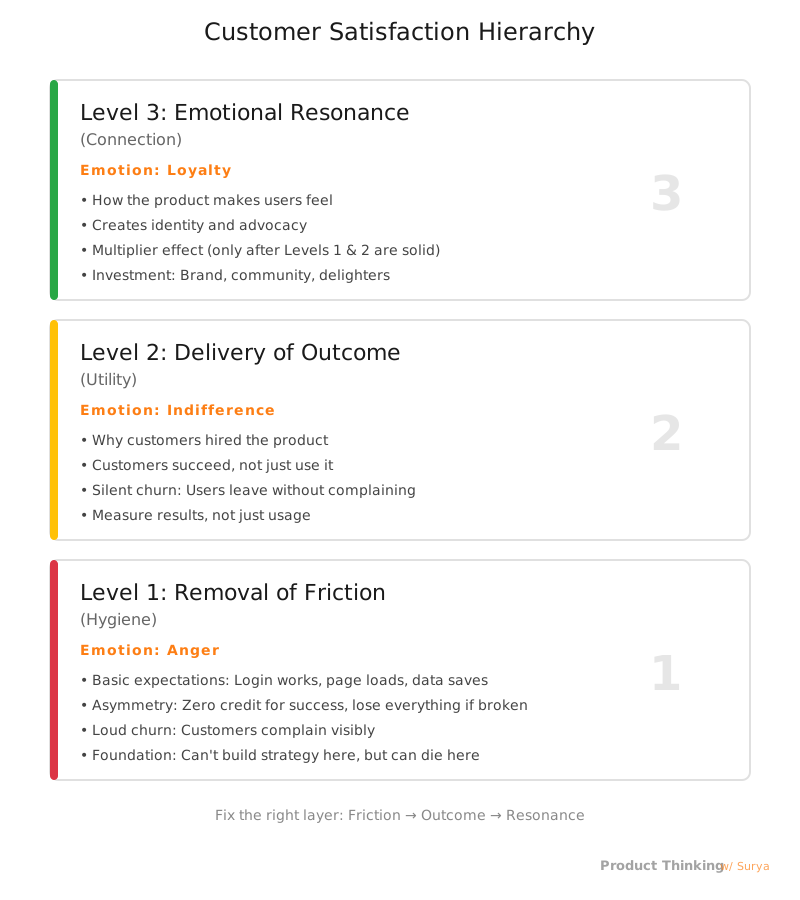
Level 1: The removal of friction (hygiene)
This is the basement. The basic expectations: the login works, the page loads, the data saves, the bill is accurate.
The defining characteristic of this layer is asymmetry. You get zero credit for getting it right. Nobody writes a thank-you note because the “Reset Password” button worked.
But if you get it wrong? You lose everything.
When you fail at this level, the customer emotion is anger. Angry customers submit tickets. They tweet. They churn loudly.
Many product teams confuse fixing friction with “delivering value.” They spend quarters squashing bugs and refactoring code, thinking they are improving the product. They aren’t. They are simply stopping the bleeding.
This is the floor. You cannot build a strategy here, but you can certainly die here.
Level 2: The delivery of outcome (utility)
This is the ground floor. This is why the customer hired your product in the first place.
This layer isn’t about whether the software works. It’s about whether the customer works. Did they get the result?
A tax software user doesn’t want a delightful interface. They want their taxes filed without an audit. A ride-share user doesn’t want a chatty driver. They want to be at the airport by 5:00 PM.
When you fail at this level, the customer emotion isn’t anger. It is indifference.
This is the most dangerous emotion in business. An angry customer submits a ticket. An indifferent customer just leaves.
They don’t complain because you aren’t worth the energy. You didn’t solve their problem, so they drifted to a competitor who would. They churn silently, without warning, without noise in your support channels.
This is where many product roadmaps fail. Teams ship features users requested, check them off the list, and wonder why retention doesn’t move. The features worked. They just didn’t matter.
The customer got the output. They didn’t get the outcome.
What this means in practice: Sometimes, delivering the outcome requires adding friction. You might force a user through a complex setup wizard because that is the only way to ensure they get value later. You might require a compliance step that slows onboarding.
A focused product team prioritizes the outcome over the friction. They recognize that a frustrated user who succeeds will stay. A delighted user who fails will not.
This is the “success vs. satisfaction” trap. Optimizing for satisfaction at this layer often means optimizing for the wrong thing. The metric that matters isn’t “Did they smile?” It’s “Did they get the job done?”
The silent churn problem
Most analytics dashboards are built to catch Level 1 failures. Support tickets spike. Error rates climb. Alerts fire.
But Level 2 failures are invisible. Users log in. They click around. They complete workflows. From a product instrumentation perspective, everything looks fine.
Then they stop renewing.
The gap between “using the product” and “getting the outcome” is where most SaaS companies lose customers. The product works. It just doesn’t work for them.
This is why engagement metrics can mislead. High DAU (daily active users) with high churn means users are trying and failing. They are putting in effort and not getting results.
The diagnostic question isn’t “Are they using it?” It’s “Are they succeeding with it?”
Level 3: Emotional resonance (connection)
This is the penthouse. This is how the product makes the user feel. Do they feel smart? Do they feel secure? Do they feel like they are part of a club?
When you win here, the result is loyalty. Customers who reach this level don’t just renew. They advocate. They recruit their colleagues. They defend you in comparison threads.
Think of Notion users who evangelize the tool unsolicited. Or Linear users who badge their workflows with pride. These products deliver outcomes (Level 2), but they also create identity (Level 3).
The mistake companies make is trying to decorate the penthouse while the basement is flooded. They invest in “delighters” (fun animations, gamification, swag, personalized emails) while their core loop is broken.
You cannot delight a user whose login just timed out. You cannot build community with a user who isn’t getting results.
Resonance is a multiplier. But anything multiplied by zero is still zero.
Diagnosing your product
When you look at your backlog or your churn data, use this hierarchy to diagnose the root cause.
High volume of support tickets? You have a friction problem. The product is breaking promises.
Stop building new features. Fix the foundation.
High churn, low noise? You have an outcome problem. Customers are leaving silently because you aren’t solving the core job.
No amount of UI polish will fix this. You need to rethink the value proposition. Talk to churned users. Ask what they were trying to accomplish and why they left.
Often, the answer isn’t “your product is bad.” It’s “your product wasn’t for me.” That is a positioning problem, not a product problem.
High retention, low growth or advocacy? You have a resonance problem. People use you because they have to, but they don’t love you.
This is where you invest in brand, community, and delighters. But only after the first two layers are solid. Resonance compounds success. It doesn’t create it.
The hierarchy in practice
Here is a real pattern I’ve seen across B2B SaaS companies:
Year 1: The product barely works. Every customer interaction is firefighting. Support volume is high. Churn is high. The team fixates on stability.
Year 2: Stability improves. Churn drops slightly. The team celebrates and shifts to “customer delight” initiatives. They add gamification, personalized dashboards, a community forum.
Year 3: Churn creeps back up. But this time, it is quiet. No tickets, no complaints. Customers just don’t renew. The team is confused because they have been investing in satisfaction.
What happened? They fixed Level 1 (friction) but never validated Level 2 (outcome). Customers could use the product. They just weren’t getting results from it.
The team optimized for delight before they earned it.
This is the trap of treating satisfaction as a single metric. Green scores can hide red outcomes.
Where teams get stuck
The hardest transition is from Level 1 to Level 2. It requires a shift in how you measure success.
At Level 1, you measure usage: uptime, error rates, support tickets. At Level 2, you measure results: customer outcomes, workflow completion, ROI.
Most product teams are better at the former. It is easier to instrument “Did the button work?” than “Did the customer achieve their goal?”
But the companies that break through are the ones that obsess over outcomes. They build customer success into the product. They instrument not just clicks, but progress toward the job.
They stop asking “Are they using it?” and start asking “Are they winning with it?”
The takeaway
Most teams optimize for smiles before they have earned them. They invest in delight while customers are still struggling to get basic outcomes.
The hierarchy matters. Friction first. Outcome second. Resonance only after you have delivered both.
The question isn’t whether your customers are satisfied. It’s which layer you are losing them.
If they are angry, you have a reliability problem. If they are indifferent, you have a value problem. If they are satisfied but not loyal, you have a resonance problem.
Fix the right layer. The rest will follow.